“It is like the dew of Hermon falling on the mountains of Zion. For there the LORD has commanded the blessing—life forevermore.”
— Psalm 133:3
Today, I would like to share about Mount Zion, the prophesied place of salvation found in the Bible.
The passage above declares that God will bestow the blessing of eternal life on Mount Zion. Today, there is a physical mountain called Mount Zion, located west of Jerusalem in Israel at an elevation of about 800 meters. However, the Mount Zion spoken of in this passage does not refer to a physical mountain, but to a spiritual mountain.
“The descendants of your oppressors will come bowing before you; all who despised you will bow down at your feet and will call you the City of the LORD, Zion of the Holy One of Israel.”
— Isaiah 60:14
At His first coming, Jesus declared Himself to be the Light of the world (John 8:12). Therefore, the “Zion” (meaning “light”) prophesied in Isaiah ultimately pointed to Jesus Himself.
Those who received the revealed word from Jesus and were gathered to Him in great numbers became the spiritual Mount Zion. Genesis records that God created Adam from the dust of the ground. Just as countless grains of earth form a mountain, the multitude of people who gathered around Jesus became the spiritual Mount Zion at His first coming.
“So when you see standing in the holy place ‘the abomination of desolation,’ spoken of through the prophet Daniel—let the reader understand—then let those who are in Judea flee to the mountains.”
— Matthew 24:15–16
Jesus spoke these words while describing the signs of the last days.
According to this interpretation, the “abomination of desolation” refers to the beast with seven heads and ten horns described in Revelation 13:1, while the “holy place” refers to the tabernacle of the seven golden lampstands (Revelation 1:20).
The reason the abomination of desolation came to stand in the holy place is that the members of the tabernacle of the seven golden lampstands broke their covenant with Jesus. As a result, they were destroyed by the destroyer, the spiritual Gentiles (2 Thessalonians 2:1–4).
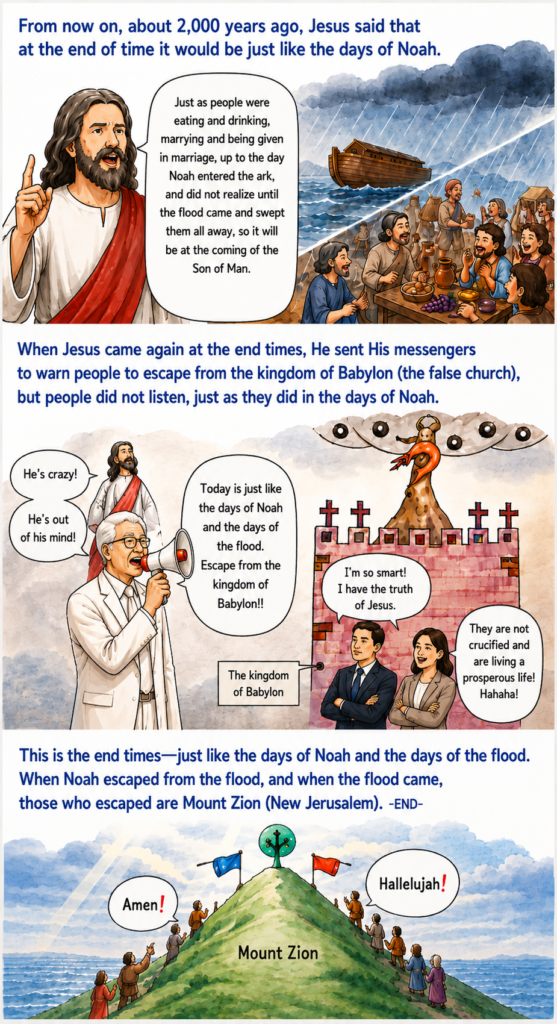
Therefore, when the events of betrayal and destruction appear, Jesus commands His people to flee to the mountain. According to this interpretation, that mountain is the Mount Zion described in the Book of Revelation.
“Then I looked, and there before me was the Lamb, standing on Mount Zion, and with Him 144,000 who had His name and His Father’s name written on their foreheads.”
— Revelation 14:1
In this passage, the Lamb refers to Jesus (John 1:29). The Mount Zion where Jesus stands consists of the 144,000 who stand with Him.
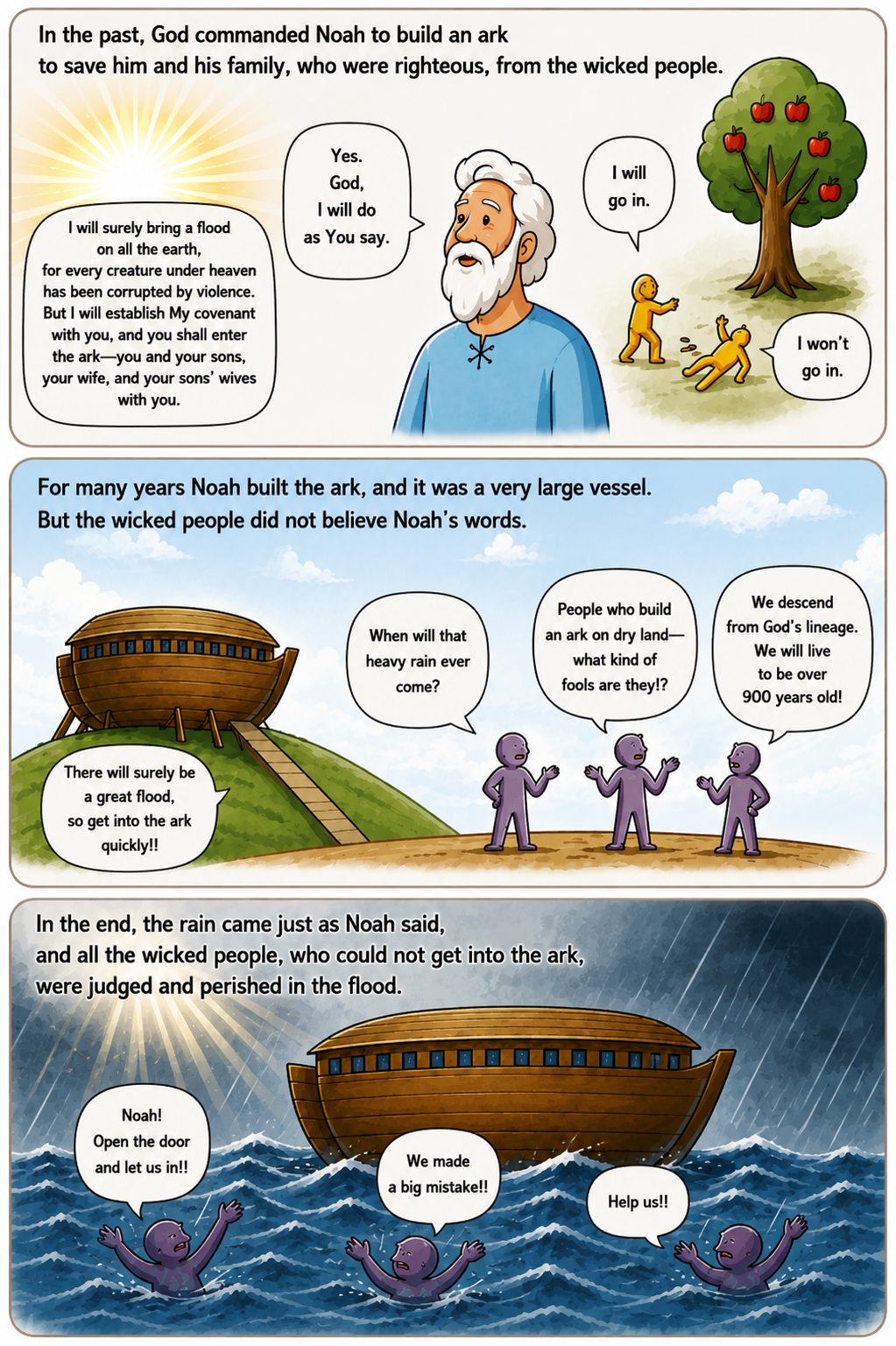
Just as at the First Coming, those who possess the revealed word—the light of revelation—constitute the spiritual Mount Zion to which believers must flee at the time of Christ’s Second Coming.
The important question, then, is this:
Are we living in the time when people must flee to Mount Zion?
According to this interpretation, the answer is yes.
This is because the event Jesus prophesied—the abomination of desolation standing in the holy place—has already taken place in the present age.
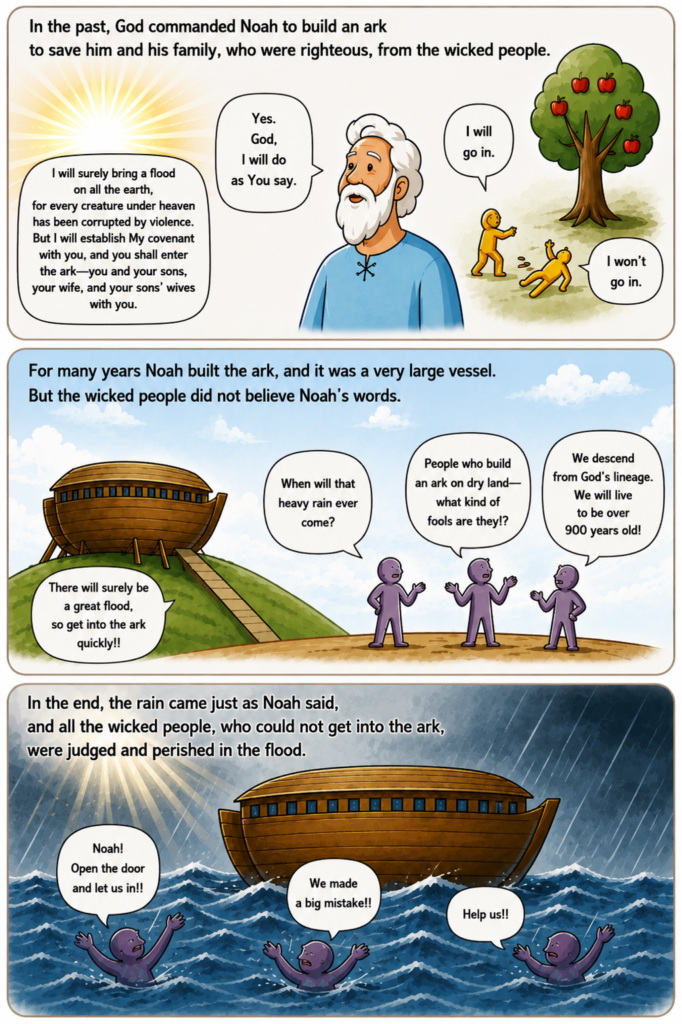
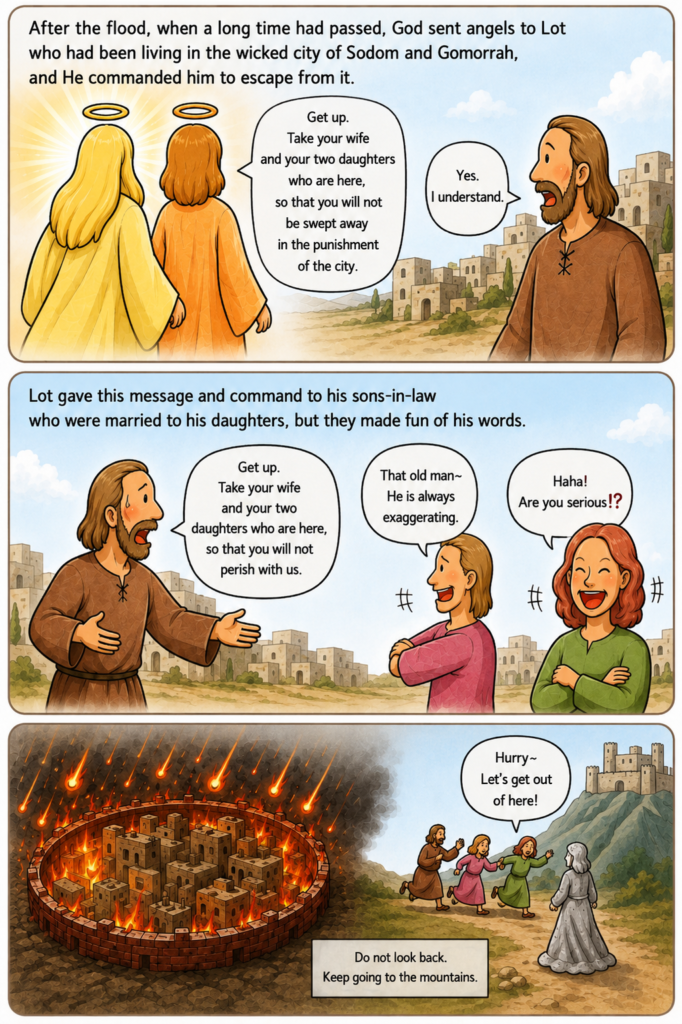
Just as there was an event of betrayal and destruction during Jesus’ First Coming, the same pattern is understood to be repeated at His Second Coming.
“The teachers of the law and the Pharisees sit in Moses’ seat.”
— Matthew 23:2
At the First Coming, the abomination of desolation was represented by the scribes and Pharisees, the religious leaders of Judaism.
“Moses’ seat” was the position that should have belonged to the prophet like Moses whom God had promised to send (Deuteronomy 18:18), namely Jesus Christ. However, the scribes and Pharisees seized that authority through religious power and led the people astray.
Those who were deceived eventually condemned Jesus as a heretic and crucified Him.
According to this interpretation, the events of betrayal and destruction at Christ’s Second Coming took place in Gwacheon, South Korea.
In 1966, a church known as the Tabernacle Temple was established. It is understood that this church had seven messengers (pastors) who had received revelation from Jesus (Revelation 1:20).
These seven messengers broke their covenant with Jesus (Revelation chapters 2–3). As a result, destroyers entered the Tabernacle Temple and, through their doctrines and religious authority, brought about its destruction.
Therefore, according to this interpretation, now is the time to obey Jesus’ warning and flee to Mount Zion.
The Mount Zion of the present age is understood to be the place where the 144,000 who have been sealed after receiving the revealed word from Jesus’ messenger are gathered. According to this belief, that place is Shincheonji’s Twelve Tribes (Revelation chapters 7, 14, and 21).
It is further taught that even Christians should study the Bible again through the Zion Christian Mission Center in order to flee to Mount Zion. Only by doing so, according to this interpretation, can one fully understand and realize the fulfillment of the prophesied events of betrayal and destruction in the present age.
In summary, this interpretation teaches that the prophesied events of betrayal and destruction (2 Thessalonians 2:1–4; Matthew 24:15–16) have already occurred in the present era. Therefore, now is the time to flee to the mountain, and that mountain is understood to be Shincheonji’s Twelve Tribes, the spiritual Mount Zion.