Now Is the Time of Harvest: The Difference Between Those Who Are Harvested and Those Who Are Not
Matthew 13:24–30
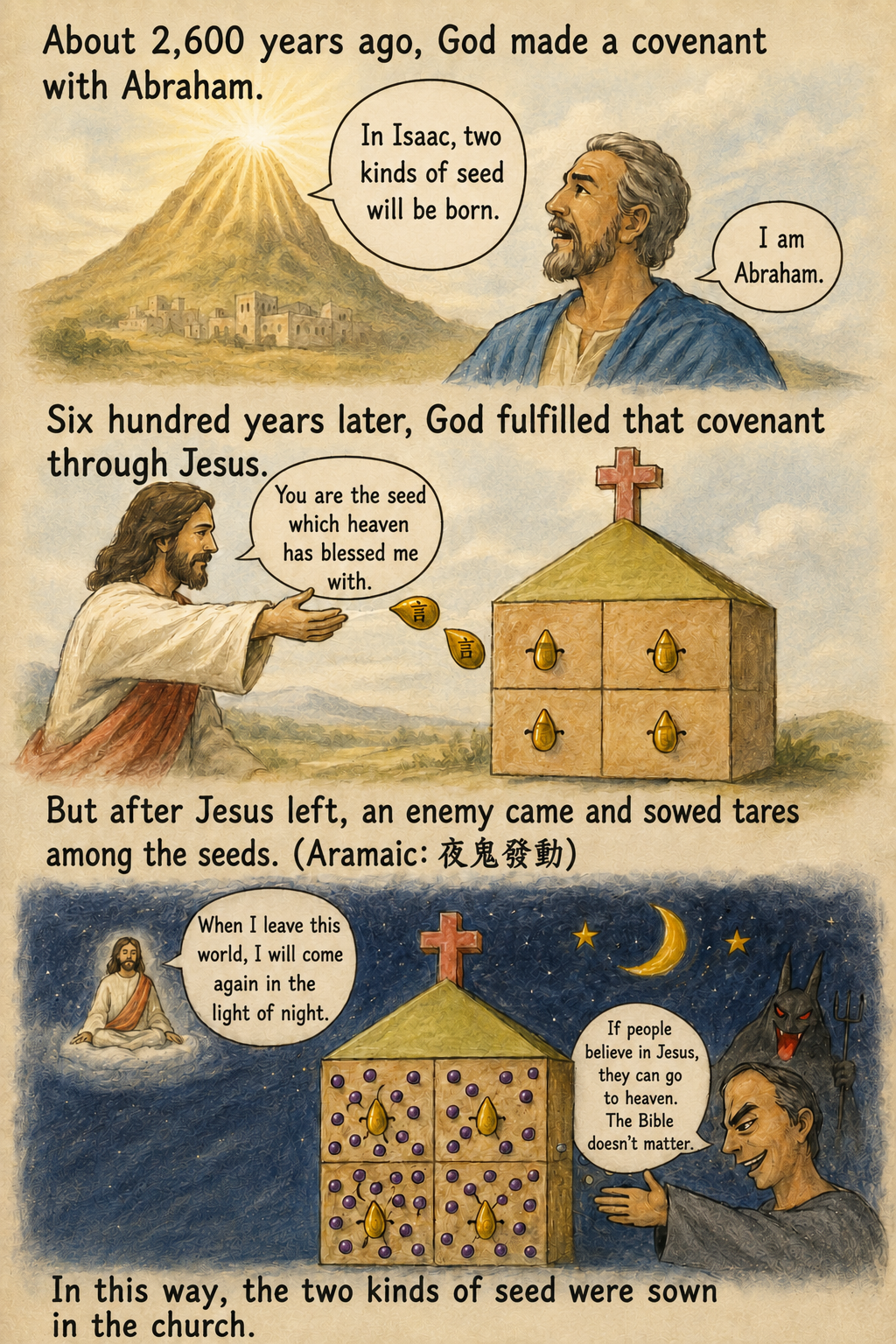
Jesus told them another parable: “The kingdom of heaven is like a man who sowed good seed in his field. But while everyone was sleeping, his enemy came and sowed weeds among the wheat and went away. When the wheat sprouted and formed heads, then the weeds also appeared. The owner’s servants came to him and said, ‘Sir, didn’t you sow good seed in your field? Where then did the weeds come from?’ ‘An enemy did this,’ he replied. The servants asked him, ‘Do you want us to go and pull them up?’ ‘No,’ he answered, ‘because while you are pulling the weeds, you may uproot the wheat with them. Let both grow together until the harvest. At that time I will tell the harvesters: First gather the weeds and tie them in bundles to be burned; then gather the wheat and bring it into my barn.'”
In the natural world, seeds are sown in the spring and harvested in the autumn. Using this familiar principle, Jesus taught that there would also be a spiritual time of harvest.
At the beginning of this passage, Jesus clearly states that He was speaking in parables. Therefore, before understanding the message, we must first understand the symbolic meanings of the field, the seed (wheat and weeds), the enemy, the time of harvest, and the bundles.
1. The Field
According to this interpretation, the field represents the world of Christianity.
Jesus said, “The kingdom of heaven is like a man who sowed good seed in his field.” In Scripture, the seed symbolizes the word of God (Luke 8:11). Since God’s word is sown into people’s hearts, the place where believers gather to receive that word is the church. Thus, the church is symbolically described as a field.
2. The Two Seeds
In the physical world there are many kinds of seeds, producing countless forms of life.
Spiritually, however, there are only two kinds of seeds:
- The good seed represents God’s word of truth.
- The weed seed represents Satan’s lies.
3. The Time of Harvest
In the world, harvest comes in autumn.
In this interpretation of Scripture, however, the spiritual harvest takes place at night.
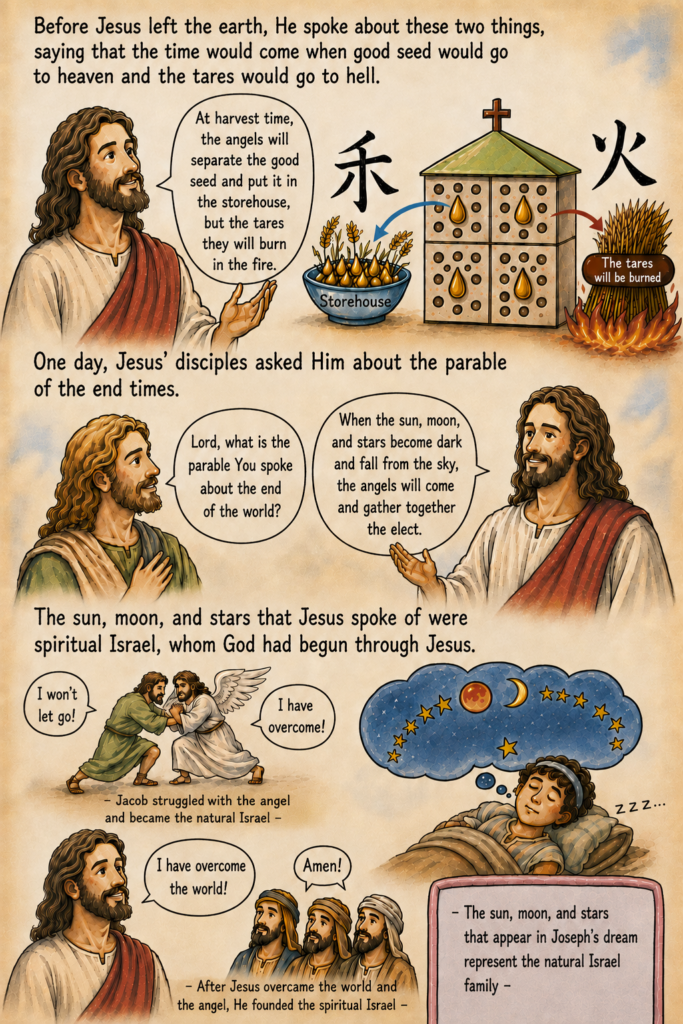
Matthew 24 prophesies that when the sun, moon, and stars are darkened and fall, Christ will come with His angels to gather the harvest (Matthew 24:29–31).
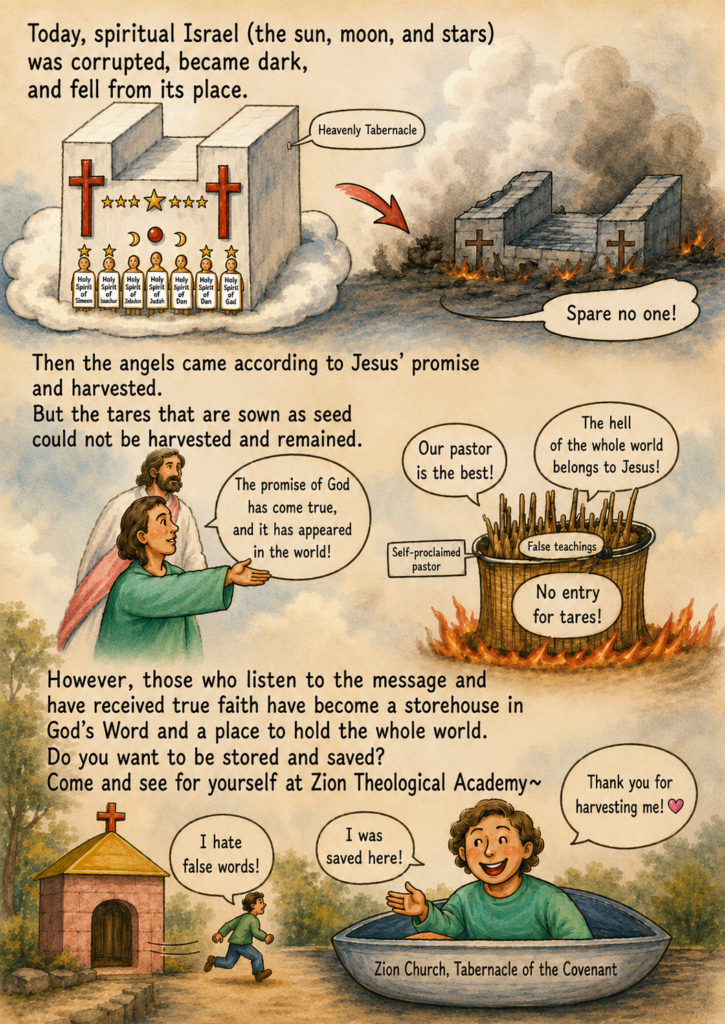
The sun, moon, and stars symbolize God’s chosen people (Genesis 37:9–11). Their darkening and falling signify their betrayal of God by abandoning His covenant and following other gods.
Accordingly, the moment when God’s covenant people fall away is understood here as the time of harvest spoken of in Scripture.
4. Bundling the Weeds
According to this interpretation, Jesus was the promised shepherd who appeared in fulfillment of prophecy at His first coming.
The religious leaders of Judaism—the scribes and Pharisees—accused Jesus of being a heretic because they feared their own falsehoods would be exposed. They also expelled those who chose to follow Him.
Those who believed the Old Testament prophecies and accepted Jesus became the true believers, while those who remained with the religious establishment are identified here as the weeds.
Jesus said to those religious leaders:
Luke 11:52
“Woe to you experts in the law, because you have taken away the key to knowledge. You yourselves have not entered, and you have hindered those who were entering.”
According to the author’s interpretation, this means the religious leaders recognized the truth of Jesus’ teaching but neither accepted it themselves nor allowed their followers to do so.
This is understood as the symbolic meaning of binding the weeds into bundles—keeping people bound to religious leaders instead of allowing them to come to Christ.
The author argues that a similar event will occur again at Christ’s Second Coming.
5. The Enemy
The enemy mentioned in the parable is interpreted as Satan, who has opposed God since the beginning.
Whether through evil spirits or the Holy Spirit, spiritual work is carried out through people. Satan is therefore understood to work through false shepherds who plant false teachings—the “weed seed”—among God’s people.
The Meaning of the Parable
According to this interpretation, two kinds of spiritual seed have been sown throughout the Christian world.
When the appointed time of harvest arrives:
- Those identified as weeds become bound through the shepherds or leaders they follow and ultimately face judgment.
- Those identified as good seed are gathered into God’s barn, symbolizing salvation and entrance into heaven.
Jesus later explained this parable Himself:
Matthew 13:36–40
Then He left the crowd and went into the house. His disciples came to Him and said, “Explain to us the parable of the weeds in the field.” He answered, “The one who sowed the good seed is the Son of Man. The field is the world, and the good seed stands for the children of the kingdom. The weeds are the children of the evil one, and the enemy who sowed them is the devil. The harvest is the end of the age, and the harvesters are angels. As the weeds are pulled up and burned in the fire, so it will be at the end of the age.”
The passage identifies the good seed as the children of the kingdom and the weeds as the children of the evil one.
According to the author, both groups exist together within the Christian world until the time of harvest, when only the good seed is gathered.
The author therefore argues that religious activities alone—such as professing faith in Jesus, claiming to have received the Holy Spirit, faithfully serving a pastor, volunteering, giving offerings, or graduating from a theological seminary—are not sufficient. In this interpretation, the decisive evidence is whether one is harvested at the appointed time.
The author further teaches that the present age is the prophesied time of harvest, because the foretold events of apostasy and destruction have already occurred in South Korea, which he identifies with the darkening of the sun, moon, and stars described in Scripture.
Since the time of harvest is the end of the age, the author asks how one may become part of the harvest.
According to this interpretation, a person must first receive the good seed, the word of God, into the field of the heart through learning and understanding Scripture. The author further argues that true understanding includes being able to explain both the meaning of the Book of Revelation and its fulfilled realities.
Finally, the author concludes that coming to Shincheonji Church of Jesus, the Temple of the Tabernacle of the Testimony constitutes being harvested. In this theological framework, those who are harvested are considered to have been born of God’s seed, become citizens of heaven, and will live eternally with God and Jesus.